
China is accelerating the development of AI technology that doesn't rely on the latest chips!
U.S. chip sanctions against China are prompting Chinese technology practitioners to accelerate the development of advanced artificial intelligence (AI) technologies that don't rely on the latest U.S. chips.
For Chinese companies, this is a critical issue, as U.S. sanctions prevent companies from accessing state-of-the-art chips like those made by Nvidia, and employees, AI researchers and industry analysts say Chinese companies have quickly consumed existing U.S. chips to build software similar to ChatGPT.
Beijing's top policymaking body said last month that China should encourage innovation in AI research and development, and the Biden administration has made it clear that further restrictions could be imposed in the future, following sweeping restrictions on the supply of chips to China last October.
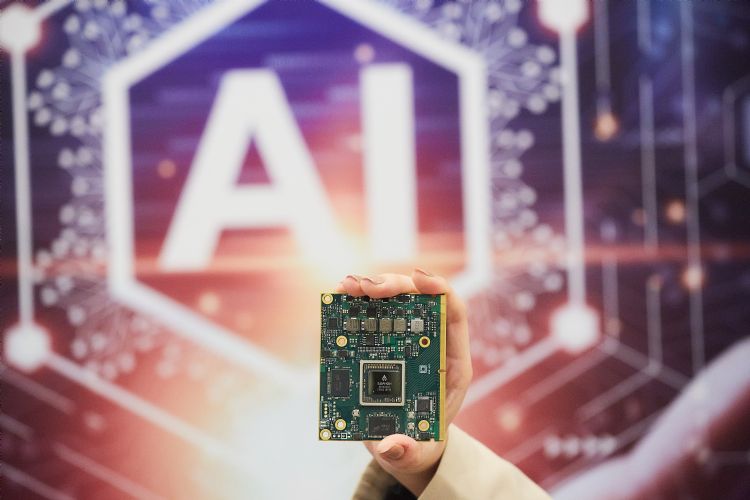
Chinese companies now have no access to the A100, currently the industry's most popular AI development chip, or the H100, a next-generation version that will provide more computing power, which was launched in March. In April, Tencent announced a new set of computing clusters, a set of linked chips that use NVIDIA's H800 chips for training large AI models.
While such methods are still not used much in global research circles and are difficult to implement, Chinese researchers have now made some progress. In a March paper, for example, Huawei researchers showed how to train Huawei's latest generation of large-scale language models using only the company's Ascend chips, and not Nvidia's. Despite its shortcomings, the model, called PanGu-Σ, has achieved advanced performance for a number of Chinese language tasks, including reading comprehension and grammar problems.